
Cathedral of Santa Maria of Tortosa
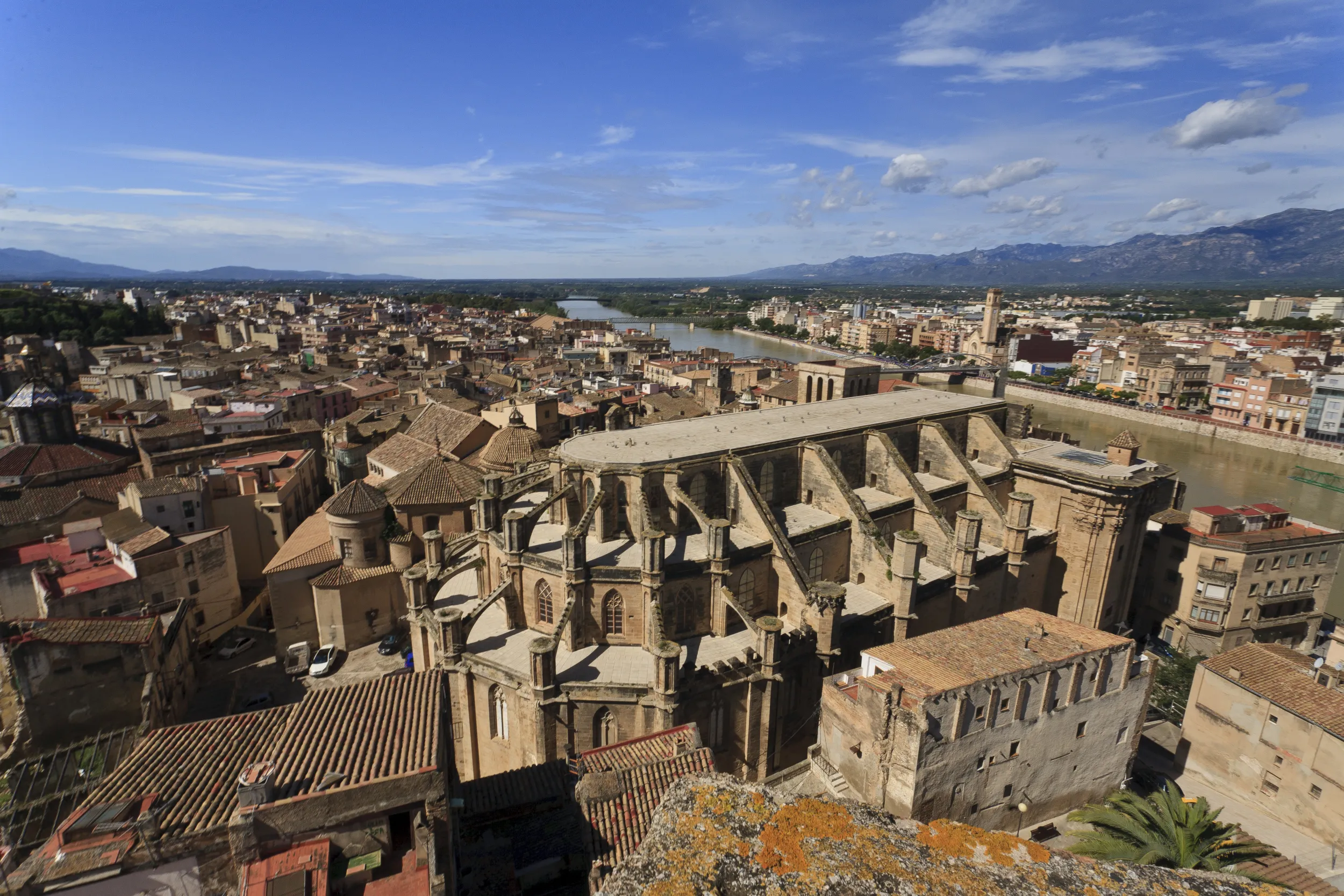
Tortosa Cathedral is undoubtedly the city's most outstanding architectural complex. The present Gothic temple, begun in 1347, was designed according to the fashions of the 14th century and occupies the site of the old Romanesque cathedral, of which only some traces remain in walls and windows. The building has a basilica plan, with three naves and side chapels. The central nave, the cloister and the chapel of Our Lady of la Cinta are some of the most recommended places to visit.
The two altarpieces in the apse area cannot go unnoticed either. In the presbytery we find the Romanesque altarpiece of Our Lady of the Star, made of gilded and polychrome wood. The other, in the central chapel of the ambulatory, is the Transfiguration altarpiece, a work from the second half of the 15th century attributed to the renowned workshop of Jaume Huguet.
The Gothic cloister has a trapezoidal plan with galleries formed by pointed arches. Its aisles contain an important display of carved stonework. Here is also the access to the old canons' dining hall (now converted into an exhibition room) as well as one of the main entrances to the Temple.
The chapel of Our Lady of la Cinta stands at one end of the central nave. It was built between 1672 and 1725 and stands out for its altarpiece with the image of Our Lady of la Cinta. The impressive mural paintings and the reddish marble cladding (quarried on the outskirts of the city, from the so-called Mare de Déu de la Cinta quarry) make it a clear example of Baroque architecture.
A good part of the Cathedral's treasure was lost during the Spanish Civil War. Even so, a good number of codices survive, along with the medieval Last Supper tapestry, an Arab wood and ivory casket, the silverwork of the high altar and the smaller of the two.